Flexo Printing Press Operators: Best Practices for Optimal Results
Proven Methods to Deliver Consistent, High-Quality Prints
The smallest details in flexographic printing often have the biggest impact. From doctor blade selection to sealing precision and cleaning routines, every variable matters. At Provident, we don’t just provide pressroom products, we engineer solutions with over 30 years of hands-on experience to help operators run cleaner, longer, and more efficiently.
Here are field-tested best practices to help press operators optimize results on press.
1. Choose the Right Doctor Blade for the Application
Selecting the correct blade profile and material is the foundation of high-quality print.
- Use Gold or Nano III blades for long runs and high-definition applications. These offer extended life (up to 9–10x) and reduced friction, making them ideal for UV, abrasive, and solvent-based inks. Reach out to our team to learn more about our long-life blade portfolio.
- Match your blade tip to the job:
- For example…
- Wing Lamella is best for fine detail and extended runs. Its unique geometry reduces bending and improves chamber sealing.
- Bevel tips are optimal for short runs and high-pressure conditions, offering fast run-in time.
- Use stainless steel blades when water-based ink is involved and corrosion resistance is critical.
Explore our blade offerings and find the right fit for your operations
2. Prioritize Blade Maintenance and Setup
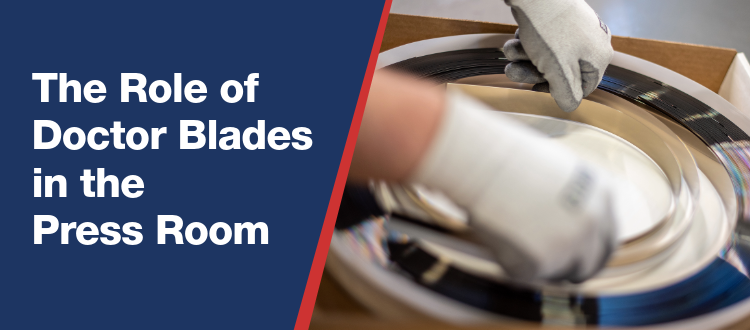
Doctor blades are precision tools, treat them accordingly.
- Inspect blades routinely for wear irregular patterns, burrs, or damage.
- Install blades evenly across the chamber to prevent inconsistent pressure and avoid skewed metering.
- Ensure blades are full seated.
3. Don’t Overlook End Seal Performance
Your end seals play a critical role in leak prevention and chamber integrity.
- Use AquaShear™ end seals for clean, crisp edges. This proprietary process delivers a better seal with no die required and ensures precise repeatability.
- Consider Premium Molded Seals for longer runs, two-part molded, and designed for maximum durability.
- Inspect Seal Regularly. Our experts can help you with an in-house end seal analysis.
4. Clean Anilox Rolls Regularly with the Right Chemistry
Contaminated anilox rolls directly impact ink laydown and image quality.
- Use Provident’s AV Series cleaners, including AV Daily Power WB and AV Periodic Power, which are low-VOC and safe for water-based, solvent, and UV inks.
- Deploy deep cleaners like AV Aniloxmatic for mechanical systems, especially during heavy ink or adhesive runs.
- Manual cleaning between jobs minimizes buildup and extends roll life.
5. Measure, Monitor, and Optimize with QC Tools
Pressroom precision starts with visibility.
- Use Troika AniCAM HD Plus™ and AMS (Anilox Management System) to assess roll condition and prevent color drift due to volume loss or scoring.
- Log blade and seal usage to forecast maintenance intervals and reduce surprise failures.
6. Follow Consistent Start-Up and Shut-Down Protocols
Efficiency is a process, not just a product.
- During setup: Verify blade alignment, ink circulation, seal integrity, and chamber pressure.
- During shutdown: Clean blades, seals, and rolls. Use a Provident blade guard to avoid damage to blades and risk of injury.
Print Quality Starts with Precision and Ends with Partnership
Every successful press run depends on process, consistency, and the right tools. At Provident, we support press operators beyond the blade, with custom end seals, advanced cleaning chemistries, defect flagging, QC tools, and expert guidance at every stage of production.
We’re not just a supplier, we’re your partner across the pressroom. From setup to shut down, we help you reduce waste, increase uptime, and produce Products you’re proud to ship.
Need help choosing the right blade, seal, or cleaning solution?
Contact a Provident Technical Sales Rep to request a free sample to start optimizing your pressroom today.