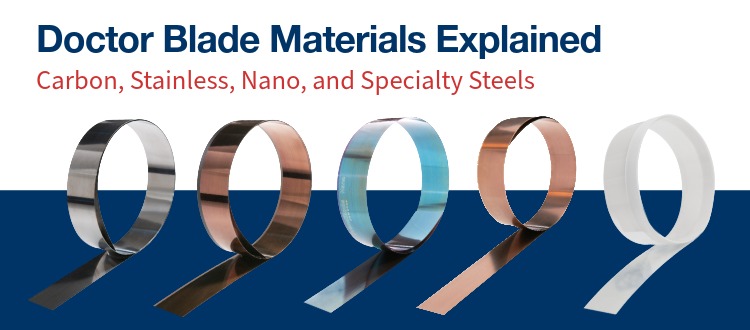
Doctor Blade Materials Explained: Carbon, Stainless, Nano, and Specialty Steels
Choosing the right doctor blade material is one of the fastest ways to stabilize print quality or quietly create problems that show up as wear, corrosion, or downtime. On press, blade material isn’t about marketing labels. It’s about how steel behaves against your ink system, anilox surface, environment, and run demands.
This guide breaks down the most common doctor blade materials used in flexo printing, how each behaves in real pressroom conditions, and where they typically succeed or fail.
Why Doctor Blade Material Matters on Press
Doctor blades live at the intersection of friction, chemistry, and pressure. Material choice directly impacts:
- Blade life and change frequency
- Corrosion and edge breakdown
- Startup stability
If you’re new to blade fundamentals or need a refresher, start with our overview of doctor blades and how they function in flexo printing systems.
High Carbon Steel Doctor Blades
Best known for: Original doctor blades, clean metering/wiping, lower upfront cost, less abrasion
High carbon steel is the traditional workhorse material for doctor blades. It delivers a fine, consistent edge that meters ink cleanly.
Where high carbon blades perform well:
- Solvent-based inks
- Controlled pressroom environments
- Short to medium run lengths
Limitations to watch for:
- Susceptible to corrosion in water-based inks
- Possible corrosion in humid environments
- Faster edge degradation
In practice, high carbon blades can be used in almost any application. High carbon and other traditional steels are commonly used across our industry.
Stainless Steel Doctor Blades
Best known for: Corrosion resistance, stability in water-based inks
Stainless steel doctor blades are engineered to resist oxidation and chemical attack. They’re often the safer choice when water-based inks, aggressive cleaners, or variable humidity are part of daily production.
Where stainless blades make sense:
- Water-based ink systems
- High-humidity pressrooms
- Applications with frequent wash-ups
Stainless blades tend to be more forgiving across shifts and operators. If corrosion-related edge failure has been an issue, switching to stainless doctor blades is often the first corrective step.
Nano & Micro-Alloy Doctor Blades
Best known for: Extended blade life, reduced friction, consistent wear
Nano-treated and micro-alloy steels are engineered materials, not just base steel with a coating. These blades modify grain structure and surface properties to control how the edge wears over time.
Why pressrooms choose nano doctor blades:
- Longer blade life compared to conventional steels
- Reduced friction against ceramic anilox rolls
- More stable edge geometry over long runs
Ideal applications:
- High-volume, long-run production
- Abrasive ink systems
- Operations focused on reducing blade changes and downtime
Nano blades often cost more upfront, but they’re designed to reduce total cost of ownership. Fewer blade changes and less exposure to sharp, worn blades mean improved safety conditions, cleaner startups, and consistent metering that offsets the material premium.
Learn more about engineered options in our specialty steel blade category.
Specialty Steels & Treated Blades
Best known for: Application-specific performance
Specialty steels include specialized alloys and treated materials designed for niche or demanding press conditions. These may be paired with coatings or unique tip geometries to fine-tune performance.
Common use cases:
- Highly abrasive inks
- Extreme run lengths
- Pressrooms balancing speed, wear, and cleanup
These blades aren’t about being “better” universally. They’re about being right for a specific application. Matching specialty materials to real press conditions is where experience matters most.
Matching Doctor Blade Material to Ink Systems
Here’s the practical shortcut most operators rely on:
- Solvent inks: All blades; carbon steel or specialty alloys
- Water-based inks: Stainless steel or gold/micro-alloy steel
- Abrasive inks: Nano, gold/micro-alloy or coated blades
- High-speed / long runs: Nano, gold/micro-alloy or coated blades
- Corrosion-prone environments: Stainless, nano or coated blades
The Bottom Line
Doctor blade material selection isn’t about chasing the newest option. It’s about controlling variables on press. Carbon, stainless, nano, and specialty steels each have a place when matched correctly to ink chemistry, environment, and production goals.
At Provident, material recommendations come from pressroom reality, not catalogs. If you’re evaluating blade options or troubleshooting wear and metering issues, our team can help you dial in the right combination.
Explore our full range of doctor blade solutions or request a sample to test materials in your own press environment.